Why Traditional Piano Lessons Don't Work for ADHD/Autistic Learners
I have heard variations of the same heartbreaking statement from so many parents: “My child loves music, but they absolutely hated their piano lessons.”
Sometimes lessons ended in tears. Sometimes practicing at home became a nightly battle. Other times, a child who seemed excited at first slowly lost interest altogether.
The truth is, traditional piano lessons aren’t a bad thing. They are just built for a specific type of learning, and they aren’t always the right fit for a neurodivergent mind.
The Problem with the "Standard" Method
Most traditional piano lessons are designed with one rigid goal in mind: technical perfection. They focus heavily on reading sheet music, strictly working through standard method books, practicing repetitive assigned pieces, and steadily building classical technique.
Shifting from Rigid Methods to Neuro-Flexible Learning
As a board-certified music therapist, I’ve seen firsthand how much a child’s experience changes when we shift away from a rigid curriculum and start to consider how a music lesson can be designed and adjusted to best support each student individually.
- Some children need sensory or movement breaks to regulate their bodies and stay focused.
- Others thrive using color-coded visual supports or structured timers.
- Many communicate best through musical improvisation or playing a duet alongside a therapist before they ever attempt to read a song independently.
These adjustments aren’t obstacles to learning. They are simply different, highly effective pathways to musical success.
Redefining Success at the Piano
For one student, success might mean mastering their favorite song. For another, it might mean building up the stamina to sit comfortably at the piano for ten minutes instead of five. Another child might be using the piano keys to work on clinical and developmental goals like:
- Practice turn-taking and cooperative communication.
- Tolerating and regulating new sensory experiences.
- Expressing complex internal emotions through sound.
- Building autonomy and self-confidence by making choices during the session.
Those are all deeply meaningful accomplishments, and they deserve to be celebrated just as proudly as someone learning a classic sonata.
The Music Therapy Difference
As music therapists, we are uniquely trained to look far beyond musical skills alone; we consider the whole child. While learning the instrument is absolutely a part of our specialized program, we actively modify teaching strategies and use evidence-based techniques to support attention, communication, emotional regulation, motivation, and sensory needs. This is all being targeted while helping children develop a genuine love for making music.
Every child deserves the opportunity to experience the joy of creating music in a way that feels successful, encouraging, and safe.
If you’ve ever wondered why traditional piano lessons haven’t been the right fit for your child, please know that you are not alone. There are alternative approaches that honor how neurodivergent children learn, and they can make all the difference in the world.
Take the Next Step: Download Our Free eBook!
Ready to discover how to turn music into a space where your child truly belongs? Grab a copy of our complete, free parent guide: Finding Their Song: Your Roadmap to Online Music Education for Neurodiverse Learn
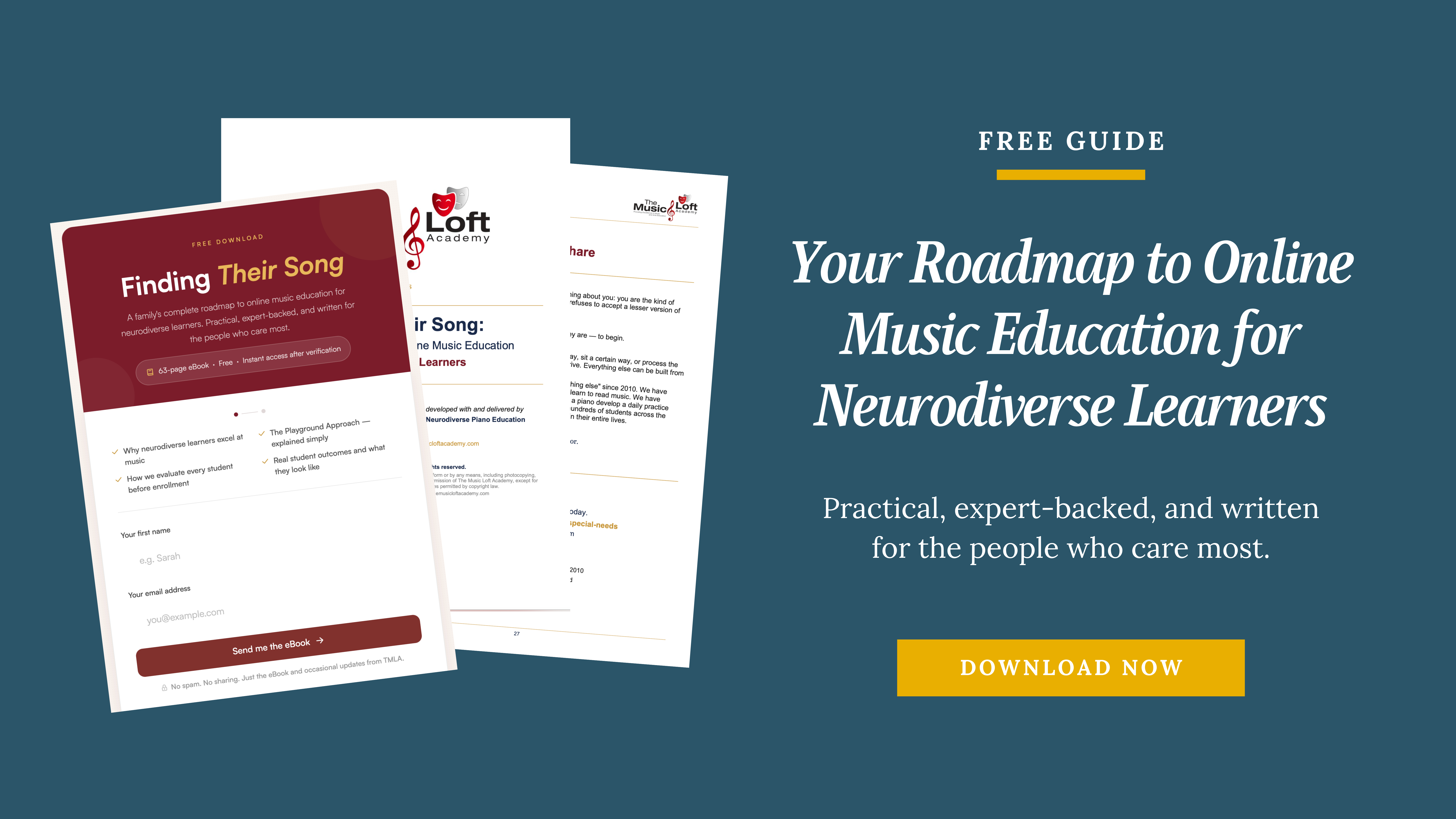
Written by our expert team, this practical guide is packed with clinical insights, sensory-friendly home setup tips, and strategies to make music lessons a source of joy instead of frustration.
Want to experience this approach in action? We are currently accepting higher-functioning students ages 10 and up for our Specialized ASD Piano Program. Join our initial launch group today and receive 50% off your first 8 weeks!
- Share