
Transition Trauma: How Online Piano Lessons Eliminate the “Studio Shift” Crisis
By Katalina Diller, MT-BC
Through my experience teaching music lessons and working with children in music therapy settings, I have come to realize how common it is for kids to be scheduled around the clock.
I remember teaching piano to a second grader and having trouble getting her to practice outside of our scheduled time. When I sat her down and asked about her after-school routine, she listed dance class on Mondays and Thursdays, T-ball and soccer on Tuesdays and Fridays, piano followed by tutoring on Wednesdays, and soccer games with swimming on weekends.
There was simply no time left in her week! I had been expecting daily practice, but her schedule didn’t allow for it. So I shifted my approach: if we had 45 minutes together, we would use that time to both learn concepts and practice them right there. I stopped putting so much emphasis on home practice and focused on making our time together as productive and enjoyable as possible.
This realization has stuck with me, especially now as I work primarily with neurodivergent students.
The Hidden Demand: Navigating Daily Transitions
For many children—and especially when managing transition trauma in neurodiverse children—it isn’t just the activity itself that can be demanding. The transition into the activity is a demand, too.
Parents understandably want to give their children every opportunity to thrive, including:
- School and academic tutoring
- Speech, occupational, or physical therapies
- Doctor’s appointments and medical care
- Sports and extracurricular activities
In private practice, I saw how difficult it was to fit everything into a family’s schedule. Many children were only available during small windows on specific afternoons, meaning every single transition mattered.
The Hidden Cost of the "Studio Shift"
Consider what happens before a traditional, in-person piano lesson even begins:
- A child must stop whatever they are doing at home.
- They have to get ready and leave their comfortable space.
- They get into the car and ride through traffic.
- They enter an unfamiliar, sensory-heavy studio building.
- They sit in a busy waiting room.
- Finally, they are expected to sit down and instantly perform.
For some children, this routine is manageable. For others, this shift drains the exact nervous system energy they need to engage in the lesson. A child might arrive overstimulated from the car ride, overwhelmed by waiting room noises, or distressed about leaving home. Yet the moment they sit at the keys, we ask them for focus, communication, motor coordination, and emotional flexibility.
A Clinical Music Therapy Perspective:
I always pay close attention to a child’s state when they enter a session. Are they regulated? Are they alert and ready to engage? Do they need movement, a slower pace, or quiet time before I place a demand on them? A child doesn’t suddenly become regulated just because they stepped into a studio. Addressing sensory regulation before music lessons is essential for true progress.
Eliminate the Studio Shift Crisis with Virtual Learning
This is one of the main reasons I am so passionate about offering online piano lessons for neurodivergent children.
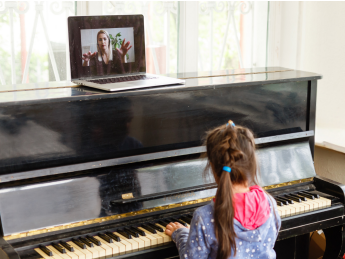
Virtual learning works to eliminate the studio shift crisis by removing the commute entirely. Instead of spending energy traveling and adjusting to a new environment, the student learns from a space they already know and trust.
A predictable home learning environment offers distinct advantages:
- Comfort & Safety: The physical space is familiar and secure.
- Built-In Sensory Supports: Lighting, seating, and quiet spaces are already tailored to the child.
- Energy Conservation: Energy isn’t wasted on transit, leaving more focus available for creative musical exploration.
FREE PARENT RESOURCE: Want to streamline your family’s routine and create a stress-free musical space at home? Download our free eBook, Finding Their Song: The TMLA Guide to Online Music Education for Neurodiverse Learners, co-created with Board-Certified Music Therapists to help your child thrive without the studio stress!
Bringing the Music to Them
Online lessons do not mean transitions disappear entirely, nor does it mean transitions are inherently bad. However, for many neurodivergent learners, removing an unnecessary commute makes a meaningful difference in their ability to participate.
When a child is calm, regulated, and supported in their natural environment, we have a far better opportunity to meet them where they are. Sometimes, the best way to help a child connect with music isn’t asking them to make one more transition.
Sometimes, it’s bringing the music directly to them through virtual music lessons at home.
Ready to Ditch the Commute and Build Musical Joy?
Discover how our MT-BC team uses sensory supports, low-stakes play, and real-time parent coaching to bring frustration-free piano lessons into your home.

Download Your Free Guide: Get your copy of Finding Their Song: The TMLA Guide to Online Music Education for Neurodiverse Learners today and see how easy music learning can be!
- Share