
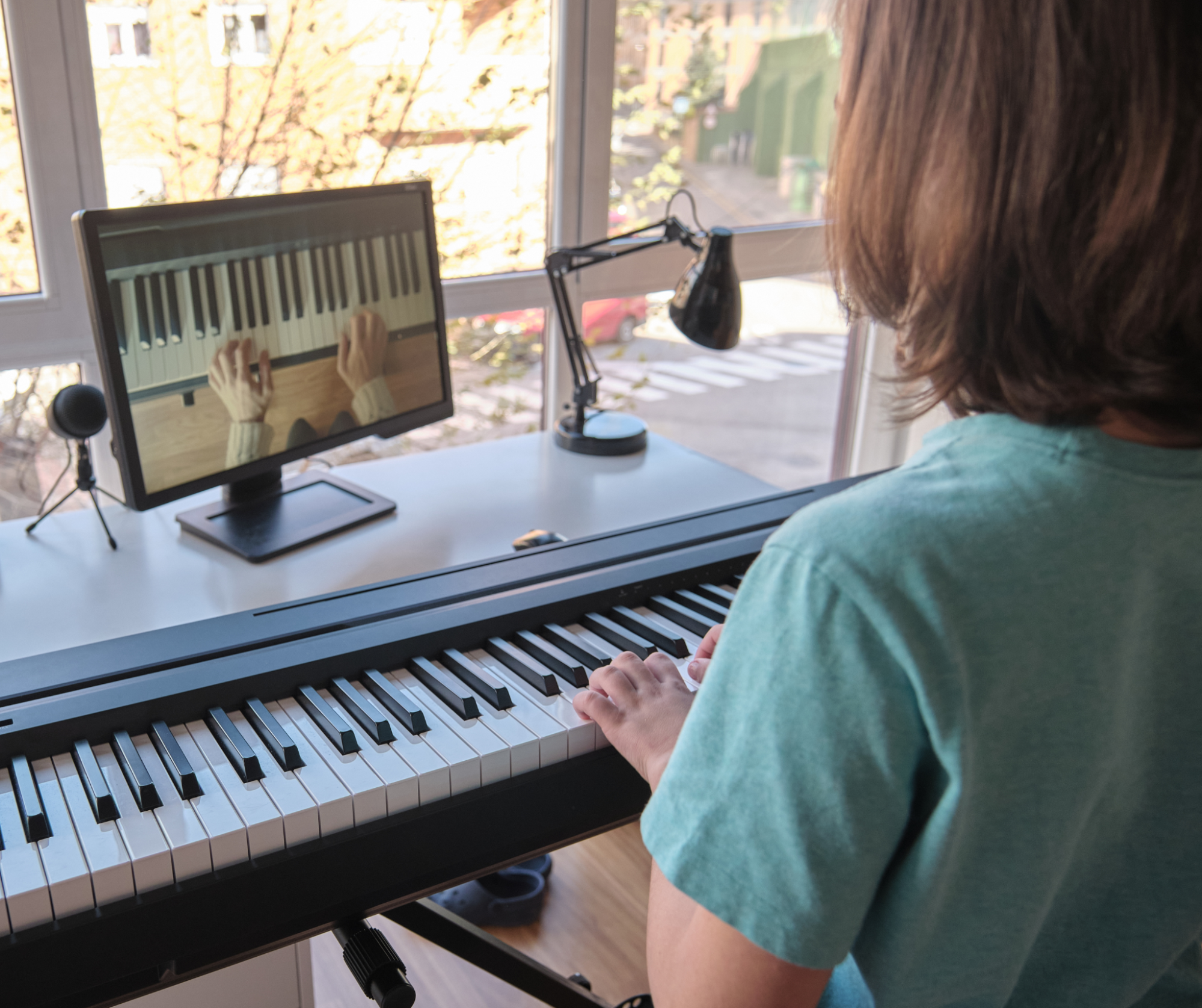
The Sensory-Friendly Piano Setup: A Practical Guide for Parents
By Katalina Diller, MT-BC
Have you ever walked into a grocery store and immediately noticed the harsh fluorescent lighting? Or have you ever been riding in the car with friends: the radio is playing, everyone is talking at once, and suddenly you can’t even follow the conversation?
Most of us have experienced moments like these. We might feel distracted, overwhelmed, or just ready for a little quiet. For individuals with sensory processing differences, these experiences can happen much more often. Everyday environments that seem manageable to others can quickly become overwhelming because of the sheer amount of sensory input happening all at once.
That is why the environment where a child learns piano is so vital. The space can either support learning or make it vastly more difficult. It’s like trying to do homework at a clean, organized desk versus sitting at a cluttered kitchen table with the TV blaring. One setting naturally invites focus, while the other constantly pulls attention in different directions.
Why Environment Matters in Neurodivergent Music Education
As a Board-Certified Music Therapist (MT-BC) at The Music Loft Academy (TMLA), I have found that simple environmental adjustments can transform a child’s practice session. The goal isn’t to create a “perfect” room. It is simply to reduce unnecessary sensory input so your child can focus on playing the piano.
Before a child ever plays their first note, the space around them is already influencing how they feel, how they regulate, and how ready they are to learn.
Here are six practical steps to create an ideal sensory-friendly piano setup at home:
1. Choose One Consistent Location
One of the first things I recommend is choosing one consistent location for lessons and practice. Having the piano in the exact same place each time builds routine and predictability. Over time, that specific space begins to communicate: “This is where we play piano.”
Many autistic children thrive on routine, and something as simple as practicing in a familiar spot makes transitions into piano lessons for neurodivergent learners significantly easier.
2. Optimize the Lighting
Lighting can make a massive difference in focus and sensory regulation. If possible, natural light is a wonderful option because it tends to be softer than harsh overhead bulbs.
However, every child is different! Some learners prefer bright spaces, while others are far more comfortable with dimmer lamps or warmer tones. Pay attention to how your child reacts to the room’s lighting.
3. Clear Visual Clutter
Visual clutter is easy to overlook. A room filled with toys, piles of papers, or bright wall decorations can unintentionally compete for a child’s attention.
Keeping the area around the piano relatively simple allows the instrument to remain the main focus. This doesn’t mean the room needs to look completely empty. It simply means reducing unnecessary visual distractions during practice time. (In Chapter 11 of our free e-book, we provide a complete checklist for setting up a low-distraction space!)
4. Control Background Noise & Acoustics
Learning piano already requires listening carefully, following directions, coordinating motor movements, and processing new information simultaneously.
To help your child focus on the primary auditory input:
- Turn off televisions and radios in nearby rooms.
- Pause extra conversations while your child is practicing.
- Limit sudden household background noises where possible.
Reducing background noise prevents the brain from having to sort through competing sounds all at once.
5. Adjust Posture & Physical Support
Physical discomfort often looks like inattention when, in reality, a child is just struggling to sit comfortably.
Make sure the piano bench is set to the correct height and that your child’s feet are supported (using a footstool if needed). Proper posture makes playing comfortable and reduces physical strain.
6. Integrate Sensory Supports & Movement Breaks
Some students benefit greatly from having access to sensory supports during practice.
- Fidgets: A small fidget tool for a free hand can help keep focus grounded.
- Movement Breaks: Providing enough physical space to stand up, stretch, or do a quick sensory reset between activities helps maintain regulation.
These supports are not distractions when used intentionally. For many neurodivergent students, they are the key to staying engaged!
Lessons from Clinical Experience
As a music therapist, I have worked with children across a wide variety of settings—from homes and clinics to hospitals, community centers, and online. One simple rule of thumb I always use is this: If I am starting to feel overstimulated, there is a good chance my client is too.
Some of the greatest lessons I’ve learned about sensory environments came while working with autistic children in an inpatient psychiatric hospital. Those units were often filled with echoing hallways, loud noises, bright fluorescent lights, and constant activity.
Whenever possible, I adjusted the space: turning off overhead lights during calming songs, placing floor mats to reduce echoing, and selecting instruments with softer sounds. Even though I couldn’t change the entire building, making small adjustments made a profound difference in my clients’ ability to participate.
That experience reinforced something I still think about today, the environment matters. Before a child ever plays their first note, the space around them is already influencing how they feel, how they regulate, and how ready they are to learn. By creating a practice space that feels calm, predictable, and supportive, we are giving children one more tool to help them experience success at the piano.
You Know Your Child Best
Every child processes sensory information uniquely. What helps one student focus may not work for another. By tailoring your sensory-friendly piano practice space to your child’s specific needs—whether that means softer lights, space to move, or acoustic quiet—you are setting them up for genuine joy and success.
At The Music Loft Academy, we specialize in neurodivergent music education delivered live in your home through an adaptive piano setup. By pairing a regulated home environment with our Proctored Practice model, your child can thrive at their own pace.
Ready to Take the Next Step? Download Our Free Guide!
Creating a sensory-friendly space is just the first step in your child’s musical journey!
Download our complete, free guide:
“Finding Their Song: A Family’s Roadmap to Online Music Education for Neurodiverse Learners”

Inside this free e-book, you’ll learn:
- How to turn sensory exploration and “stimming at the piano” into musical progress.
- The TMLA Neuro-Affirming Framework (Pattern, Story, Play).
- How to use Hand-Under-Hand (HUH) support at home to guide practice without conflict.
- How our specialized ASD Music Program helps students achieve real musical mastery!
Click here to get your instant download today!
(Curious about our specialized online lessons? Learn more about the TMLA ASD Music Program Here!)
- Share