
The Power of the Pause: How Virtual Piano Lessons Give Processing Time the Room It Needs
By Katalina Diller, MT-BC
A safe space. This is a term that has been used over and over in our culture. It can refer to a place where individuals are allowed to authentically be themselves, a physical location that brings comfort, or a group of people that makes an individual feel most secure. I am sure all of us can list at least two or three places that we consider our own safe spaces.
For most of us, those safe spaces include our home, a favorite room, or even a cozy corner. This is the place we naturally gravitate toward after a long, exhausting day.
For me, it is a corner in my bedroom with a giant bean bag I’ve had since I was eight years old. The walls are covered with pictures of my loved ones, my instruments are nearby, and I can truly be myself.
For individuals with neurodivergence, the term “safe space” holds even more power.
Understanding Sensory Overload and the Nervous System
When an autistic individual is not in a space where they feel comfortable and regulated, their brain may function at a high state of alert. They may be navigating sensory overload, feeling the exhaustion of social masking, or simply trying to manage an environment that feels overwhelming.
For a neurotypical person, I sometimes think of this like wearing headphones where someone has turned every volume knob up to 100%:
- The hum of the refrigerator feels as loud as a chainsaw.
- The texture of your shirt feels like sandpaper rubbing against your skin.
- A sibling humming across the room feels like they are shouting directly in your ear.
That would make me have a meltdown, to say the least.
For many autistic individuals, sensory overload and environmental demands can eventually become too much to manage, leading to meltdowns or deep distress. As a Board-Certified Music Therapist (MT-BC), I have seen firsthand how something that seems small to a neurotypical adult can actually take up a massive amount of internal processing space for a child.
A Quick Story from My Clinical Practice:
A child I used to work with escalated during a session simply because he did not want to wear his shoes. The expectation was that he would wear shoes because we were outside his home. He began to scream after I suggested moving around the room. After taking a step back and calming down together, we ended the session without shoes. That experience reminded me that what seems insignificant to us can take up a huge amount of space in a child’s brain.
Why Home Is the Optimal Environment for Learning
A space that feels comfortable and safe allows an autistic child to relax and step out of that heightened state of alert. When a child is regulated, they are far more able to take in new information, listen, participate, and learn.
This is one of the foundational reasons we believe virtual piano lessons for neurodivergent students offer such a powerful alternative to traditional studio environments:
- Zero Travel Stress: No navigating busy traffic or stressful car rides.
- Controlled Sensory Conditions: Lighting, room temperature, and background noise are already tailored to your child’s preferences.
- Familiarity: Students learn in a physical space they already know and trust, leaving more nervous system energy available for creative exploration.
FREE PARENT RESOURCE: Looking for practical strategies to set up your home environment for sensory success? Download our free eBook, Finding Their Song: The TMLA Guide to Online Music Education for Neurodiverse Learners, created alongside Board-Certified Music Therapists to help your child thrive at the keys.
The Power of the Pause: Honoring Processing Time
Beyond the physical environment, there is another profound benefit to online music lessons for neurodiverse learners: the pause.
In an in-person lesson, there can be an unspoken pressure to respond quickly. A teacher asks a question, and the child feels expected to answer immediately. A teacher gives an instruction, and the child feels pushed to begin right away. Even when an educator doesn’t mean to create pressure, having another person sitting directly next to you can make that expectation feel overwhelming.
Neuro-affirming online piano instruction creates breathing room:
- A student can take a quiet moment to digest what their teacher just said.
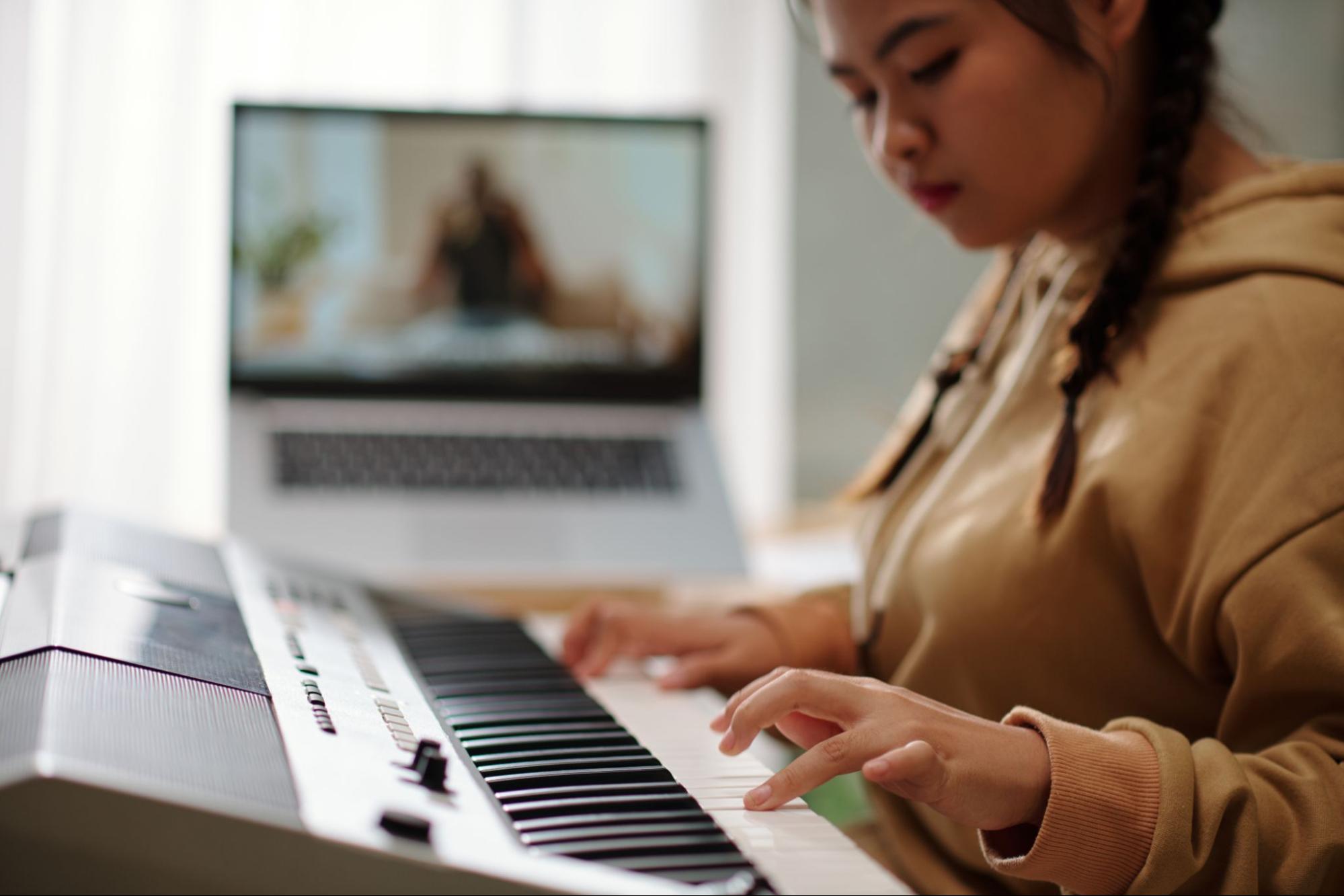
- They can look at their piano keys, visually map the pattern, and decide how they want to respond.
- They can move at a pace that honors their internal nervous system rhythm.
That pause does not mean the student isn’t listening. It does not mean they don’t understand. And it certainly does not mean they aren’t capable of learning.
Sometimes, they just need a little more time.
As a music therapist, I have learned that processing time for autistic children is essential. We cannot expect a child to respond on our strict timeline. Often, the most effective thing we can do as educators is give them space and allow them to get there on their own.
Shortening the Transition Curve
In my private practice experience, I noticed a consistent trend with neurodivergent children: it often takes about a month, if not longer, to build trust and feel regulated in a brand-new physical space. Every child is unique, but building familiarity takes time.
While starting any new program involves a transition, online music lessons for neurodiverse learners significantly shorten that curve. Instead of spending weeks adjusting to the lighting, scents, sounds, and social demands of an unfamiliar studio building, students begin their musical journey from a foundation of safety: home.
Giving a child a familiar space and the room to pause is often all they need to show us what they are truly capable of achieving.
Ready to Explore a Neuro-Affirming Path to Piano?
Discover how our MT-BC team uses sensory supports, low-stakes play, and real-time parent coaching to help neurodivergent learners build confidence at the keys.
Download Your Free Guide: Grab your copy of Finding Their Song: The TMLA Guide to Online Music Education for Neurodiverse Learners today!
- Share