
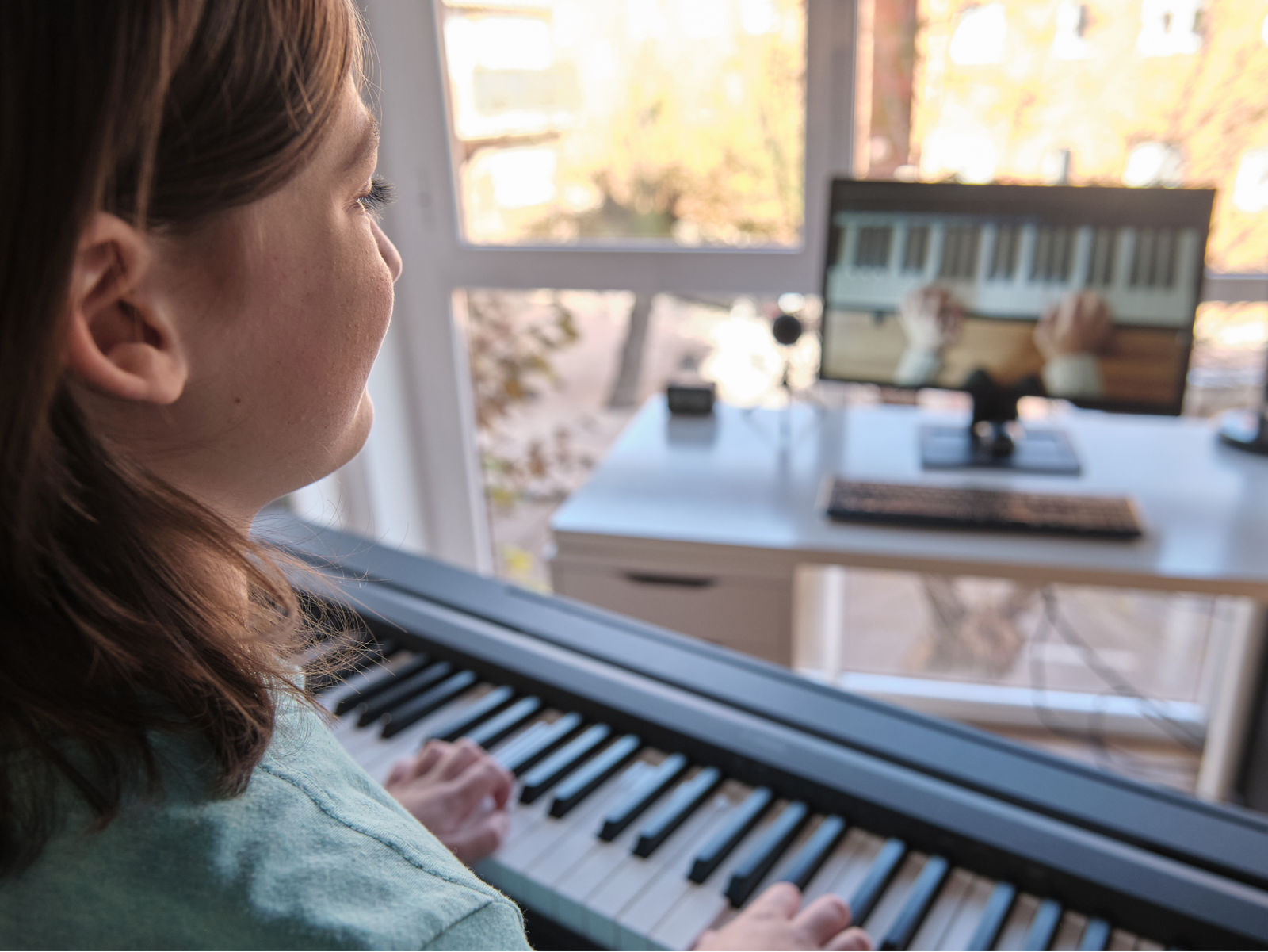
"Can We Play It Again?" Harnessing Repetitive Musical Behaviors Through Virtual Instruction
By Katalina Diller, MT-BC
Practice makes perfect.
This is a phrase we have all heard hundreds of times throughout our lives. I personally prefer the phrase “practice makes progress” because perfection is a made-up concept that tends to be a little boring. The underlying truth is simple: the more you practice something, the better you get at it over time.
Do you remember the first time you learned a challenging skill?
The specific skill that comes to my mind is driving a car. I remember the first time my dad took me to a parking lot, talked me through hand positions, pedals, and gears, and had me drive in circles. It felt like an insane task, like I would never be able to drive daily without thinking about how intense it felt.
I kept practicing.
Gradually, over time, I improved. I would not call myself a perfect driver, but I have made progress. Driving feels like second nature now; I simply get in my car and go.
Playing an instrument works the same way. Mastering an instrument is a clear sign that someone has dedicated hours to learning that skill over time.
I had a piano teacher tell me that mastering a piece required practicing every single measure at least 32 times in a row. In my opinion, that is extreme. But the lesson remains: practice makes progress.
Reframing Repetition in Neurodivergent Learners
Repetition is a cornerstone in therapy spaces because practicing a skill repeatedly makes it feel familiar and manageable.
I once worked with an autistic child who used repetitive speech, frequently repeating the same phrases. This child loved Lady Gaga’s music. During our sessions, I incorporated her songs to encourage communication beyond his usual phrases.
We practiced this for months. By the end of our time together, he sang the chorus of “Bad Romance.” That is the true power of music and repetition.
Repetition serves an important purpose for neurodivergent individuals:
- Predictability: Knowing what comes next lowers anxiety.
- Sensory Comfort: Familiar sounds offer grounding and calm.
- Sense of Control: Choosing the same song provides autonomy in a busy world.
As a Board-Certified Music Therapist (MT-BC), I see repetitive behaviors as an opportunity to build trust and connection.
Using Repetition as a Learning Tool
When a student asks to repeat something, we can lean into that preference to create sensory predictability in music education:
- Need to hear the same song five times? Make that song a predictable part of the routine.
- Want to start every lesson with the same musical activity? Use it as a comfortable transition into learning mode.
- Want to play the same piece every week? Explore new musical elements within that familiar structure.
This is why repetition and consistency are essential when delivering virtual piano lessons for neurodivergent kids. Having similar routines each session allows a child to predict what comes next. This might mean keeping a consistent hello song, starting with the same warm-up, or returning to a favorite piece every week.
Bridging Lessons and Home Routines
Virtual instruction offers a distinct advantage: learning happens directly in the student’s natural home space.
When a child learns from home, the lesson extends beyond an isolated 30- or 45-minute block. Through co-regulation in virtual piano instruction, the teacher, therapist, and parent work together to turn lesson repetition into daily home support.
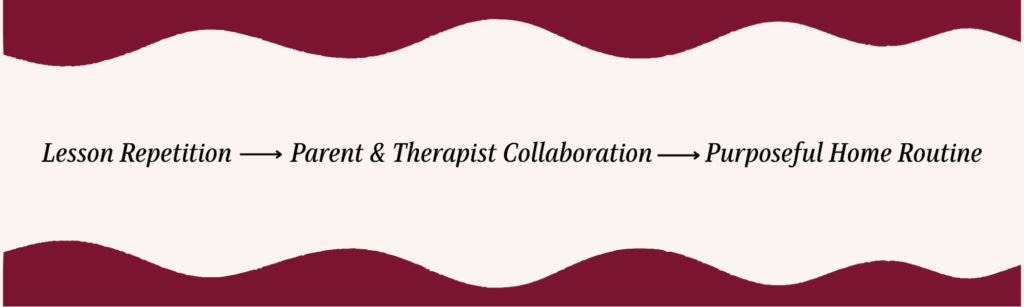
If a student loves beginning every lesson with the same song, that song can become a transition cue before practicing piano, starting homework, or settling in for the evening.
Giving repetition a purpose unlocks powerful learning moments:
- A repeated song becomes an opportunity to practice a new rhythm.
- A predictable routine becomes a smooth transition cue between activities.
- A favorite piece builds independence and self-confidence.
FREE PARENT RESOURCE: Want to learn how to turn your child’s favorite songs and musical routines into stress-free home practice? Download our free eBook, Finding Their Song: The TMLA Guide to Online Music Education for Neurodiverse Learners , to explore our complete Pattern, Story, Play methodology!
Parent-Therapist Collaboration in Virtual Learning
Collaboration between the teacher and parent is critical. Parents understand what works at home, while teachers identify musical opportunities within those daily rhythms.
Through therapist-led online piano instruction, we leverage music therapy strategies for home routines so that repetitive behaviors in music lessons for neurodivergent students become practical tools for learning outside the lesson.
The phrase “Can we play it again?” is an invitation to connect, build confidence, practice, and get creative. Doing something again opens up new possibilities within something that already feels safe and familiar.
Transform Musical Repetition Into Confident Learning
Ready to see how a structured, play-based approach can help your child find joy at the piano?
Download Your Free Guide: Grab your copy of Finding Their Song: The TMLA Guide to Online Music Education for Neurodiverse Learners today to build a supportive, low-stress music routine at home!