The Art of Non-Verbal Musical Dialogue: Connecting Beyond Spoken Words Through the Screen
By Katalina Diller, MT-BC
Talking is overrated.
I truly believe that, and I personally classify myself as a “yapper.” Do not get me wrong: if I am meeting up with a friend for coffee or catching up with a colleague over lunch, I will yap their ear off. That being said, I do not think words are appropriate in all situations.
As a society, we have gotten used to constant noise. We have gotten used to background music, podcasts, or the television blasting to the point where silence can feel uncomfortable.
Have you ever been in a situation where you are talking with someone going through a terrible time, and you don’t know the “right” thing to say? You might make a joke or say something just to fill the space. Through my time working as a Board-Certified Music Therapist (MT-BC), I have learned the power of silence.
I currently provide music therapy to individuals in hospice care. For people facing the end of life, there are not always words to be said. When I have hard conversations with patients or their families, they are not looking for me to say the perfect phrase; they are just looking for someone to be there.
Sometimes, being present is the intervention.
Overcoming Overstimulation: Why "Less is More" in Virtual Lessons
This lesson is deeply transferable to my work with neurodivergent children. Not every learner communicates through spoken words, and even for verbal children, processing a constant stream of verbal instructions can be overwhelming.
When managing sensory processing in online music lessons, neurodivergent brains are often processing many inputs at once:
- Environmental sounds and background noise
- Physical movements and motor coordination
- Visual information from the screen
- Internal body regulation and focus
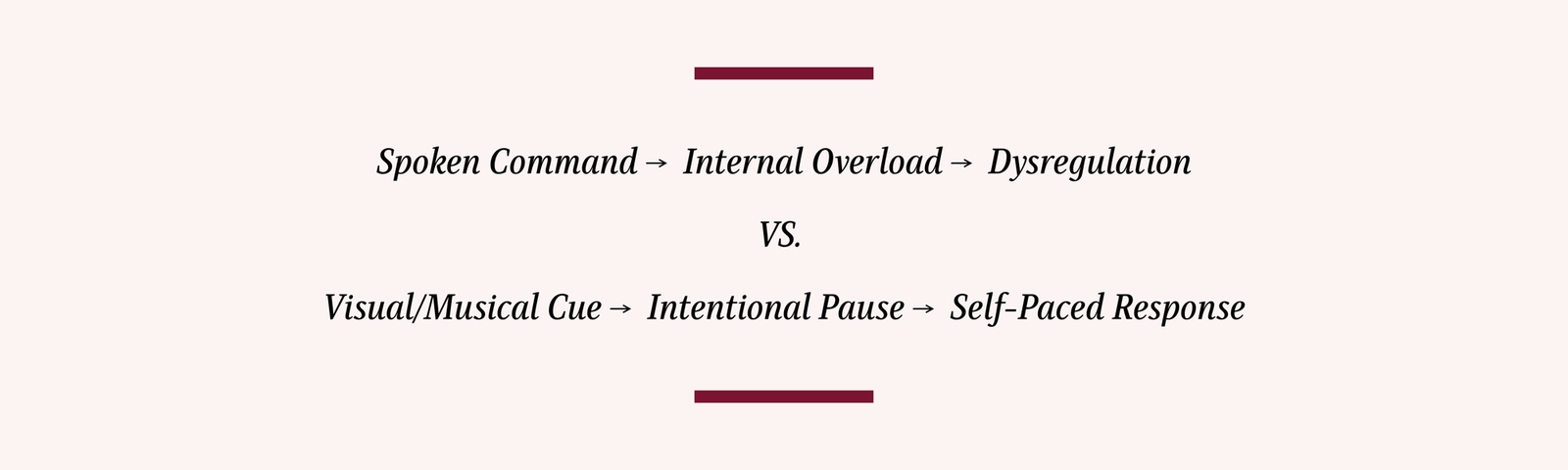
When there is already so much happening, adding a barrage of spoken commands is not always the answer. When working with neurodivergent children online, less is more.
Music as a Two-Way Conversation
This is where music becomes so powerful. Music gives us a shared language beyond spoken words.
A student does not have to verbally tell me that they are excited, overwhelmed, interested, or ready to continue. They show me through how they play a note, move their body, respond to a rhythm, or look toward the camera. As a therapist, I listen for those subtle responses and use them to guide our session.
Implementing non-verbal communication in online piano lessons creates unique opportunities for genuine connection through the screen:
- Dynamic Camera Angles: Switching camera views gives students an up-close, distraction-free view of hand positioning, visual cues, or instruments without verbal clutter.
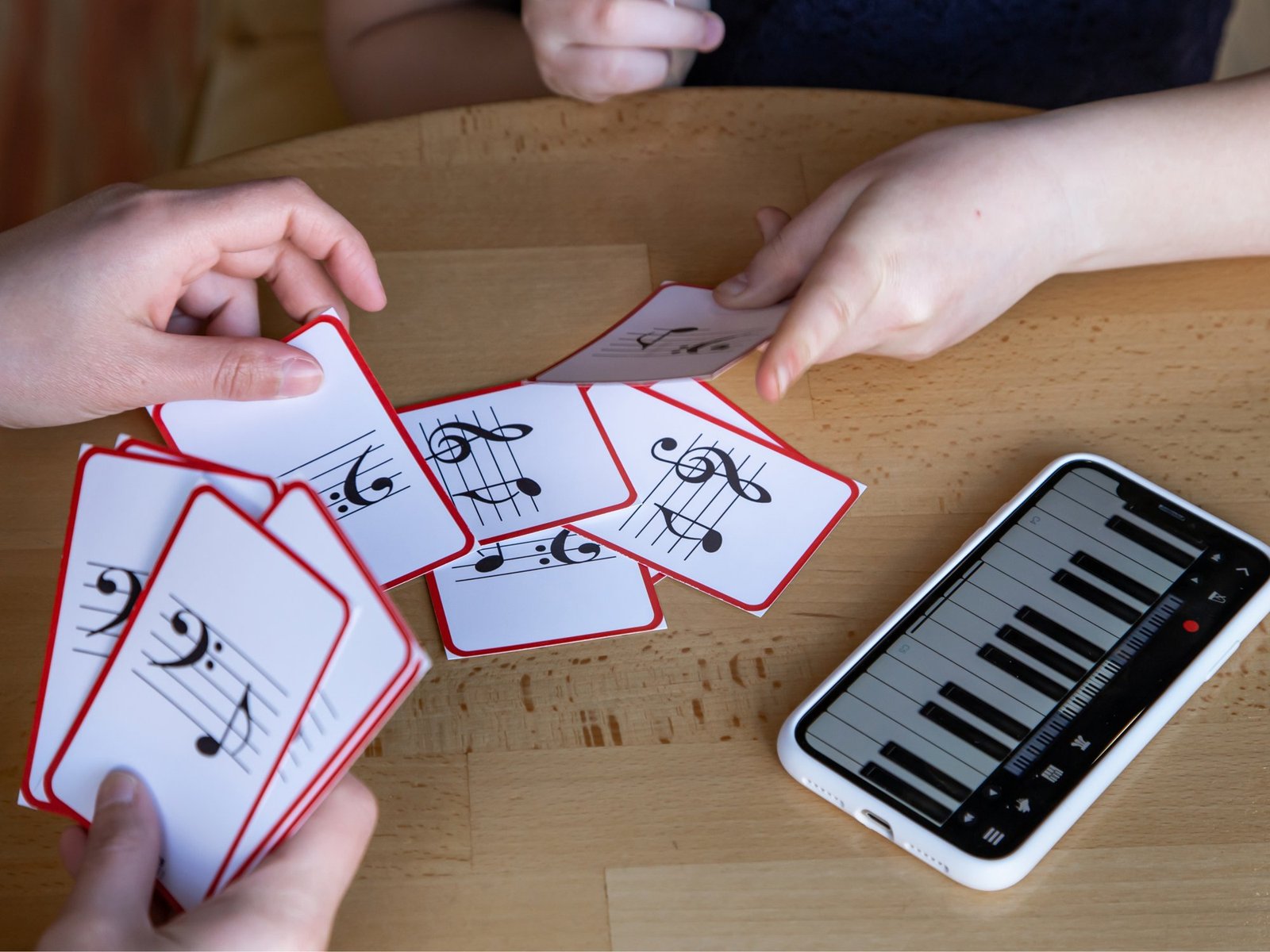
- Demonstration Over Explanation: Instead of giving lengthy verbal instructions, we demonstrate, pause, wait, and respond musically.
- Interactive Visual Cues: Utilizing interactive visual cues in online music instruction, like visual stories, colors, or movement games, helps make concepts clear and accessible.
FREE PARENT RESOURCE: Want to discover how visual cues and sensory-friendly frameworks can transform your child’s home practice? Download our free eBook, Finding Their Song: The TMLA Guide to Online Music Education for Neurodiverse Learners, to explore our complete Pattern, Story, Play methodology!
Using Clinical Music Therapy Techniques for Virtual Lessons
Board-Certified Music Therapists rely on proven music therapy techniques for virtual lessons to keep learning playful and accessible:
- Structure Through Song: Songs provide clear boundaries without feeling like a rigid list of rules.
- Rhythmic & Visual Cues: Rhythm provides predictability, helping non-speaking learners anticipate what comes next.
- Intentional Pauses: Giving a child time to process without interruption honors their unique processing speed.
And sometimes, the most important thing a teacher can do is simply wait.
We often feel compelled to fill every silence with another question or instruction. But what happens when we let the student take the lead? What if—instead of asking, “Are you ready?”—we play a short musical phrase and pause?
That response might be a sound, a body movement, a glance, a single note on the keys, or even silence. All of those responses give us valuable insight.
Expanding Our Definition of Communication
Fostering non-verbal dialogue isn’t about taking spoken communication away from a child, but expanding our definition of connection. When we stop expecting every interaction to happen through spoken language, we open the door for virtual piano lessons for non-speaking autistic students that feel natural, safe, and empowering.
Through therapist-led online piano instruction, we move past rigid expectations and build true musical confidence right from home.
And that is where real connection happens, even through a screen.
Experience a Neuro-Affirming Approach to Music Learning
Ready to discover how low-stress, therapist-designed strategies can help your non-speaking or neurodivergent child thrive at the piano?

Download Your Free Guide: Grab your copy of Finding Their Song: The TMLA Guide to Online Music Education for Neurodiverse Learners today and take the first step toward a frustration-free music journey!
- Share