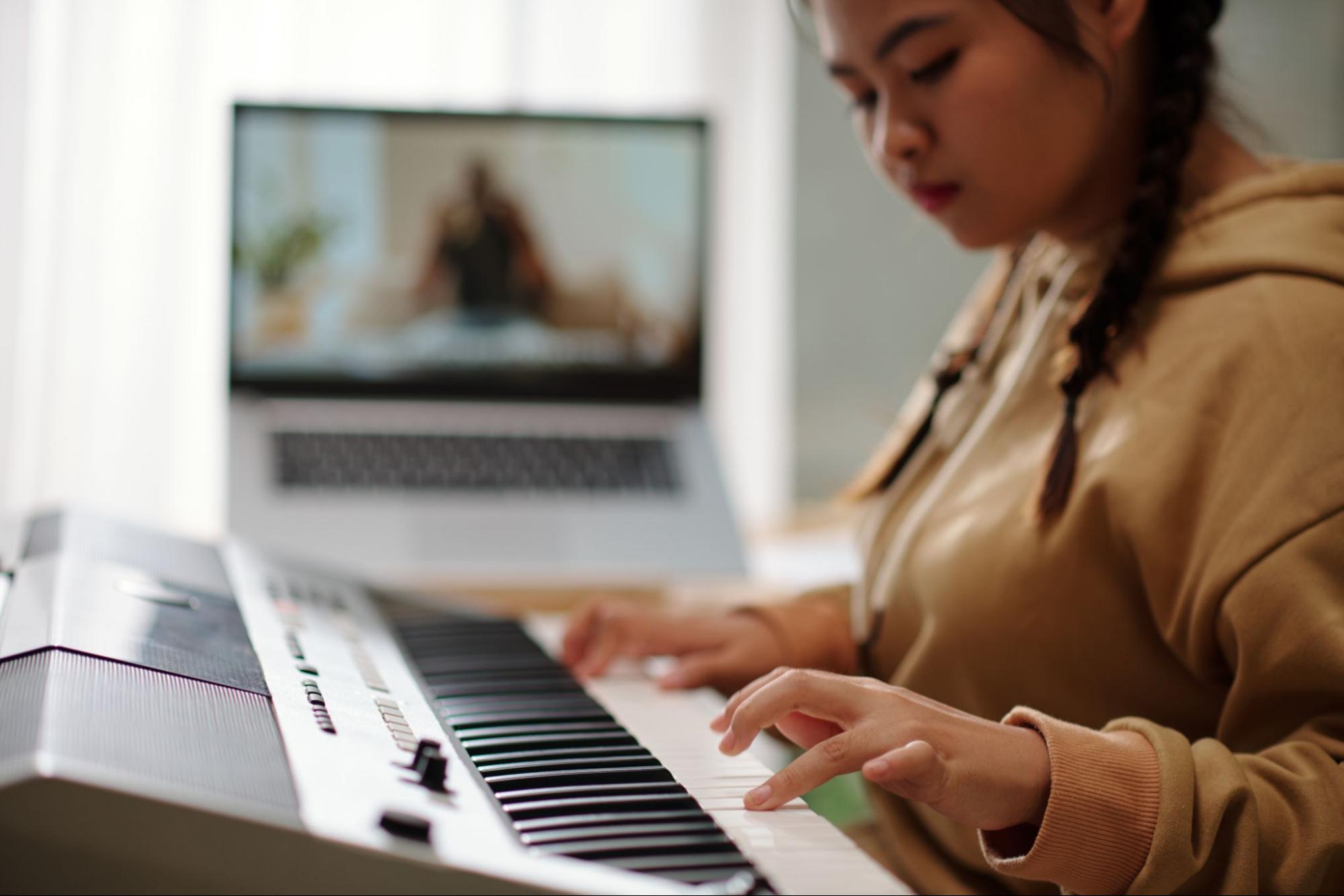
Meeting Them at the Keys: The Case for Neuro-Flexible Virtual Piano Instruction
By Katalina Diller, MT-BC
As a society, we have many systems that people are simply expected to fit into with little to no accommodations. Whether it’s school, college, sports, or music lessons, there is often an expectation that there is one “right” way to learn. When someone struggles within that system, they are often labeled as “bad” at it or told that it just “isn’t for them.” Too often, people fall behind not because they are incapable, but because the system wasn’t designed to meet their needs. Imagine how frustrating that must feel.
Many neurodivergent children are incredibly capable of learning in school, participating in extracurricular activities, and developing musical skills. However, they are not always given the resources or support they need to thrive. When accommodations are missing, these children can end up feeling discouraged or excluded from environments where they absolutely have the potential to succeed.
Want to learn how we adapt music instruction for every brain? Download Our Free E-Book: “Finding Their Song: A Family’s Roadmap to Online Music Education for Neurodiverse Learners” to discover how flexible, neuro-affirming strategies can unlock your child’s musical potential!
Why Traditional Piano Methods Fall Short
Traditional music lessons can sometimes present these same rigid challenges. Many programs rely on:
- A single, rigid lesson book
- Fixed, inflexible milestones
- One standardized teaching style for every single student
A traditional teacher may become frustrated when a student has difficulty sitting still for long periods or isn’t learning the material in the expected way. The problem isn’t that the student can’t learn, it’s that the lesson isn’t taking into account that every brain is different. We all learn differently, and some students need accommodations in order to be successful.
What a Music Therapist Brings to the Bench
As a Board-Certified Music Therapist (MT-BC) at The Music Loft Academy (TMLA), I have seen countless neurodivergent children thrive in music when they are given individualized support, accommodations, and positive encouragement.
One of my core philosophies is that everyone deserves to know what success feels like.
Rather than expecting every student to fit into one teaching method, we adapt the lesson to fit the student through neuro-flexible piano practice.
As music therapists, we are trained to:
- Understand different diagnoses, sensory profiles, and processing styles
- Recognize each learner’s unique strengths and passions
- Build lessons around how they learn best, focusing on what is possible rather than what is difficult
Some of the adaptations we make during online piano lessons for neurodivergent students might seem unconventional in a more traditional music setting, but they are often exactly what a student needs to experience success.
Lessons from Clinical Practice: Building True Confidence
Once a student begins to believe they can do something, that confidence carries into future learning. Ironically, it’s often after experiencing success that some accommodations naturally become less necessary because the student’s confidence has grown.
During my time working in inpatient psychiatry, I provided adaptive music for many children with autism. In that setting, building confidence was often far more important than learning the instrument itself. Many of the children I worked with had never successfully played a complete song before.
Through individualized adaptations, a strong therapeutic relationship, and lots of encouragement, they were able to learn and perform a piece by the end of our time together. I will never forget watching students who once doubted themselves stand up and perform in front of their peers. Seeing someone accomplish something they once believed was impossible, or something they had simply never been given the opportunity or support to achieve, is one of the greatest gifts of being a music therapist.
Flexibility Unlocks Lifelong Joy
When lessons become flexible instead of rigid, students don’t just learn piano. They build confidence, independence, and a positive relationship with learning which can be transferable to all areas of the student’s life.
Through our virtual Neurodiverse Learning Music Program, we bring this exact same flexible, therapist-led approach into the comfort of your home, meeting your child right where they are.
Ready to Experience Neuro-Flexible Learning at Home?
If you’re ready to move away from rigid, high-pressure music lessons, we’ve put together a step-by-step roadmap for your family!
Click Here to Download “Finding Their Song” Free E-Book Today!
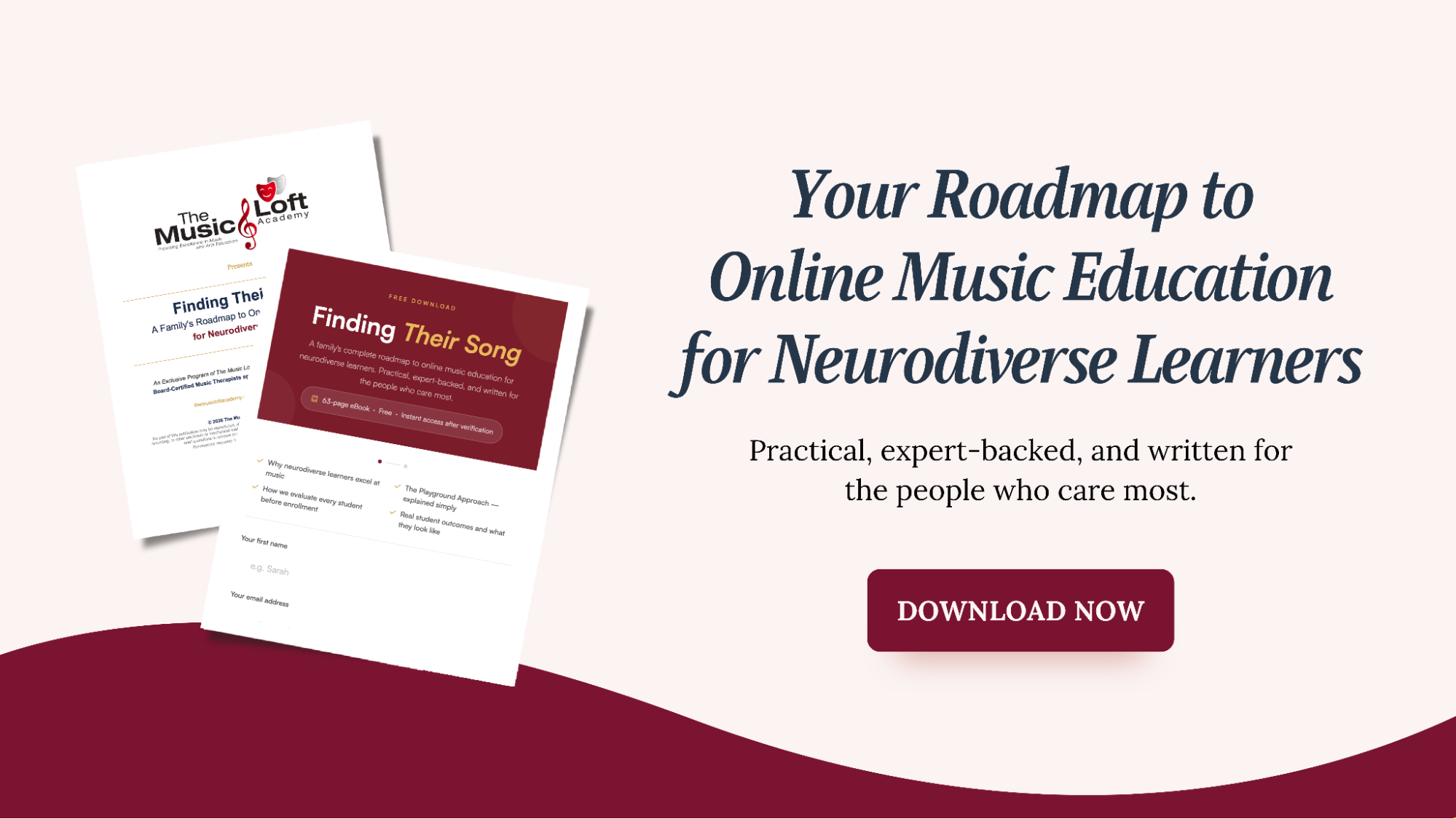
Inside your free copy, you’ll discover:
- The TMLA Neuro-Affirming Framework (Pattern, Story, Play)
- How to use flexible, play-based strategies during home practice
- How our online Proctored Practice model empowers both parents and students
(Curious about how our live online lessons work? Learn more about the TMLA Neurodiverse Learning Program Here!)
- Share