
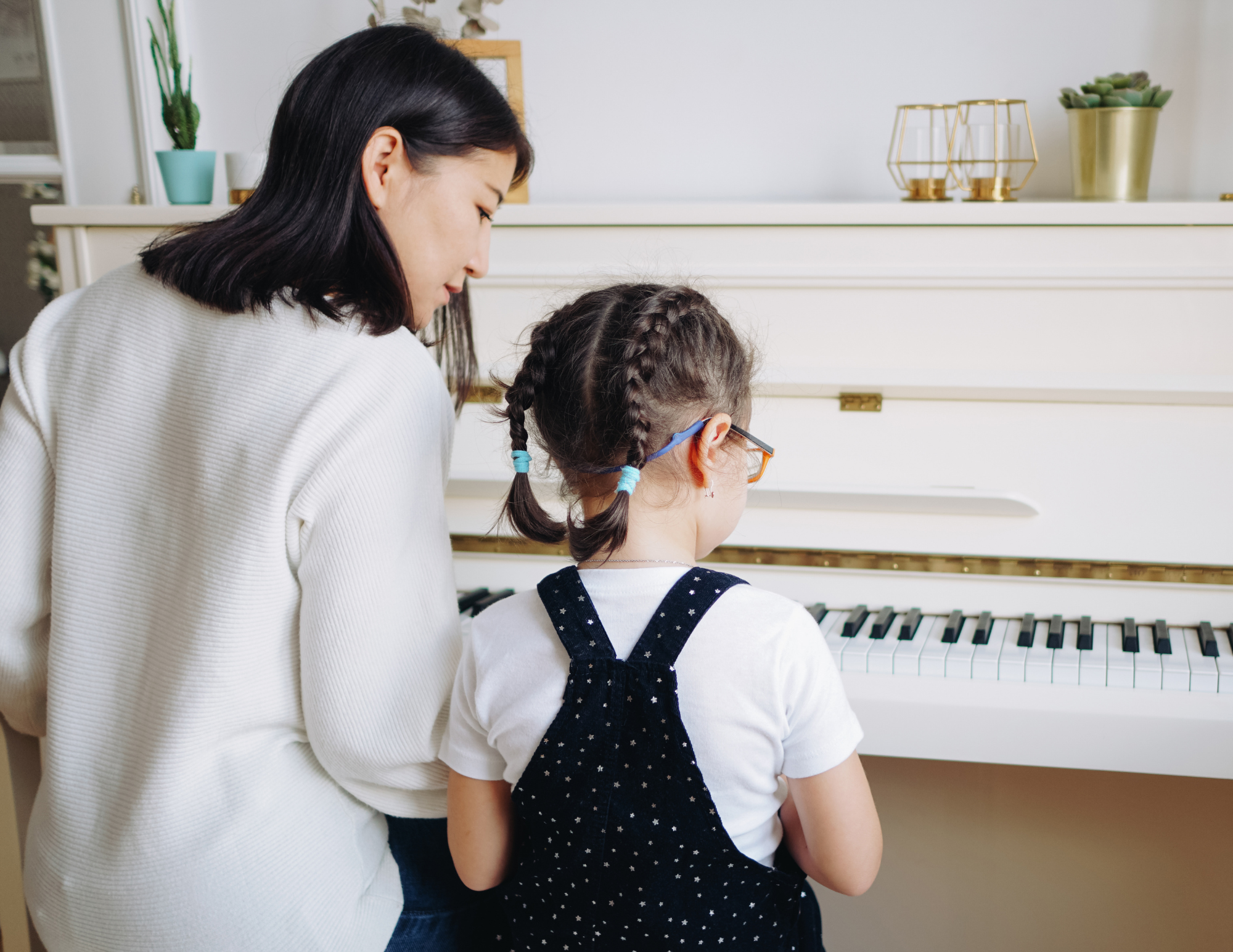
Understanding the Hand-Under-Hand Prompting Technique in Online Piano Lessons
By Katalina Diller, MT-BC
Sometimes we all just need a little help when we are learning something new. Whether we are learning to play an instrument, participating in a group activity, or simply following a schedule, there are moments when we need someone to guide us through the experience before we are ready to do it on our own.
Learning to play the piano is no different, especially for neurodivergent learners.
As adults, we often take for granted how many different skills are involved in playing even a simple song. We instinctively know:
- Which hand to use and where to place it
- How much pressure to apply to a key
- When to shift our fingers to the next note
- How to actively listen for the correct sound
For a beginner—particularly a child with autism or ADHD—all of those sensory inputs and motor demands happen simultaneously.
And that can quickly feel overwhelming.
Why the Piano Can Cause Sensory Overload
The piano itself provides an incredible amount of sensory information at any given second. There are 88 keys staring back at the student. There are varying pitch levels, the tactile feedback of pressing down a key, the challenge of coordinating both hands, and the auditory demand of following verbal instructions.
When I look at a piano through the eyes of a child who is learning differently, I don’t just see an instrument. I see an environment filled with choices, sensory input, and opportunities for distraction.
Think about it this way: Imagine asking a child to focus on playing just two specific notes when there are 86 other tempting options sitting right in front of them!
That is precisely why sensory-friendly piano instruction and prompting techniques are so vital for musical success.
Looking for more strategies like this? Hand-under-hand guidance is just one of many ways we make piano lessons accessible. Click here to download our FREE Guide to Adapted Piano Lessons for more neurodiversity-affirming strategies you can use at home!
What is the Hand-Under-Hand Technique?
As a Board-Certified Music Therapist (MT-BC), one of my favorite, most effective strategies to support neurodivergent students is the hand-under-hand technique.
It is a simple strategy, but it can make a tremendous difference in helping a child successfully participate in piano playing while still encouraging independence and honoring autonomy.
How Hand-Under-Hand Works at the Piano:
- Tactile & Physical Guidance: The educator or parent places their hand gently underneath the child’s hand, guiding the movement toward the keys.
- Autonomy & Control: Instead of forcing or pushing the child’s fingers from above (hand-over-hand), hand-under-hand allows the child to stay in control, feeling the movement beneath their palm while maintaining total freedom to pull away if overstimulated.
- Immediate Sensory Feedback: Pairing gentle physical movement with the natural sound of the piano provides immediate tactile and auditory feedback, helping students process musical concepts faster.
How Parent-Guided Support Works in Online Lessons
In our Specialized ASD Music Program, this technique becomes part of our specialized proctored practice model. Because our lessons take place in your child’s comfortable home environment, the music therapist and parent work together through the screen as a team to give the child consistent guidance.
How virtual coaching works in practice:
- Real-Time On-Screen Demonstrations: During a live online session, the music therapist demonstrates the technique on camera.
- Guided Parent Coaching: The therapist coaches the parent or caregiver step-by-step on how to gently guide the child’s hand to the correct keys while offering calm verbal encouragement.
- At-Home Empowerment: This step-by-step approach not only builds the child’s confidence at the piano, but also empowers families with concrete parent-guided piano practice strategies they can continue using between weekly sessions.
Building Confidence through Fading Prompts
The level of physical support always depends on the individual child. Some students only need a brief, subtle prompt before taking the lead, while others benefit from more steady physical guidance when tackling a brand-new skill.
As confidence grows, the physical support gradually fades until the child is completing more and more of the skill independently.
The ultimate goal is always independence, but every student reaches that milestone on their own unique timeline. For some children, mastering a skill independently might take a week; for others, it may take several months. Along the way, every single small success deserves to be celebrated.
What Gradual Support Looks Like in Practice:
- Step 1 (Full Prompt): Initially, under live camera guidance, the caregiver guides the student’s hand from underneath to the correct keys while cueing finger placement.
- Step 2 (Partial Prompt): As the student gains confidence, the therapist helps the caregiver reduce physical support, allowing the child to locate keys independently while continuing to offer visual or verbal cues.
- Step 3 (Independent): Physical and verbal prompts are faded entirely as the student proudly takes full ownership of the song!
Supporting Your Child’s Unique Music Journey
Hand-under-hand prompting is just one of many ways music therapists shape how we offer adapted piano lessons to fit a child’s unique learning style, sensory profile, and processing speed. By providing the right amount of support at the right time, we can significantly reduce frustration, build confidence, and help children experience success at the piano.
Ready to Make Music Practice Stress-Free at Home?
If you want to discover more practical tools to support your neurodivergent learner at the keys, we’ve put together a comprehensive resource just for you!

Inside this free guide, you’ll learn:
- Sensory regulation tips to prevent practice burnout
- Play-based ways to teach music theory
- How to foster a lifelong love for music without rigid, high-pressure methods
- Share